
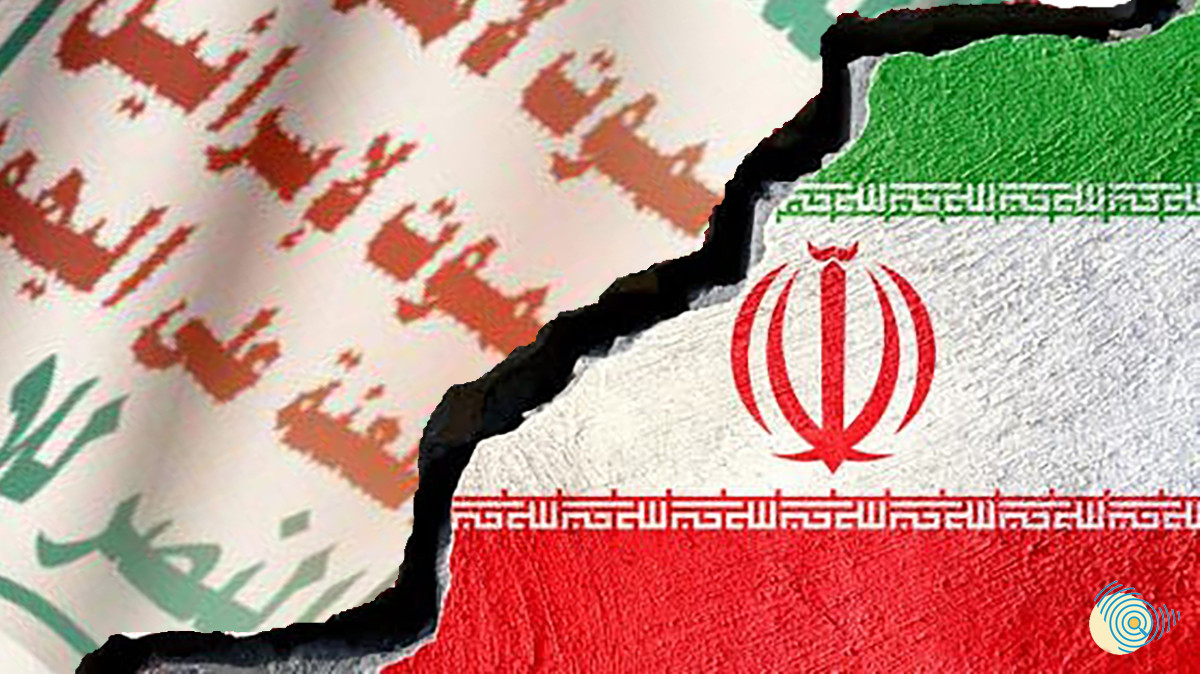
The deepening Iranian crisis, which has unfolded amid a broad wave of protests since late December 2025, has compelled Tehran to shift from an offensive approach centred on expanding its influence to a more cautious, defensive posture focused on managing risks and containing costs.
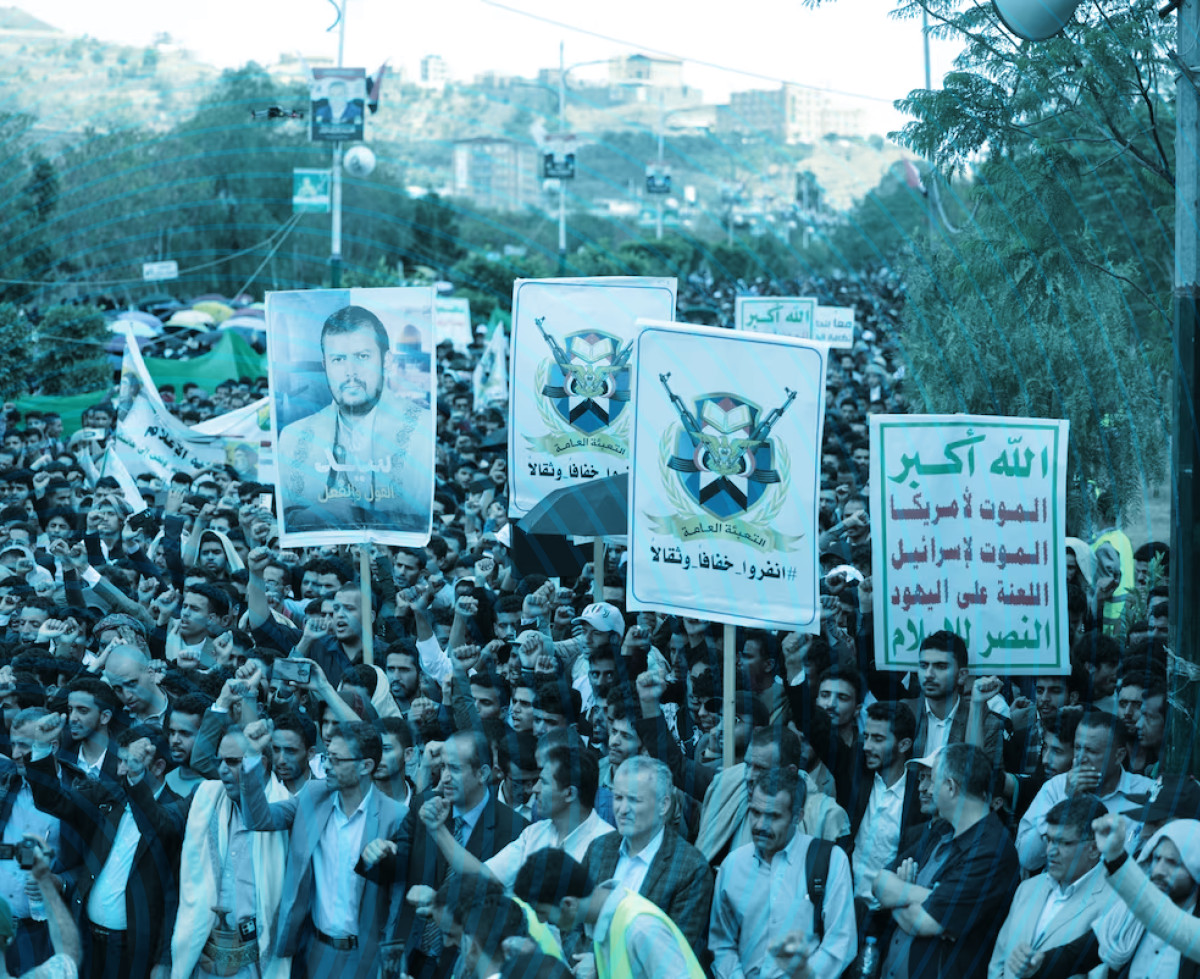
Within this transition, the relationship with Yemen’s Houthi movement has acquired particular importance, as it represents a model of a low-cost, high-return proxy that retains a degree of operational autonomy, enabling it to adapt to shifting conditions. This dynamic renders the Houthis highly sensitive to any recalibration of priorities at the Iranian centre, whether in terms of military support, political backing, or their functional role within regional deterrence equations.
Accordingly, this assessment assumes that the Iranian crisis does not propel the Houthis toward a single, predetermined trajectory. Rather, it reshapes their options across a spectrum that encompasses rationalising escalation, political repositioning, and preserving carefully calibrated pressure tools. The assessment seeks to explore these options in the near term by analysing the nature of the group’s reliance on Tehran and by anticipating possible behavioural scenarios should the Iranian crisis persist or evolve into a more acute and consequential phase.
Indicators of a Shift in Iran’s Regional Behaviour
Iran does not appear to be heading toward a comprehensive strategic retreat from its regional presence. Rather, it is transitioning from an offensive approach centred on expanding influence to a defensive posture focused on risk management and cost containment.
This shift is reflected in several indicators. First, the security hierarchy has been reordered, with domestic control and the containment of protests now clearly taking precedence over external engagement requirements. This has been accompanied by an expansion of the authority of coercive institutions and the diversion of increasing resources towards protecting centres of power. This process necessitates curtailing the financial and logistical support available for high-cost regional projects.
Second, the transformation is evident in a recalibration of political and media discourse, including the transmission of carefully measured de-escalatory signals towards international and regional actors.
The third indicator lies in recalibrating proxy behaviour by encouraging them to scale back escalation or adhere to more restrained rules of engagement, thereby reducing the risk of being drawn into large-scale confrontations that could impose uncalculated political or military costs on Tehran. In this context, proxies are shifting from instruments of active expansion to mechanisms for managing escalation and safeguarding existing gains.
Taken together, these indicators suggest that Iranian policy has entered a phase of defensive management of influence, aimed primarily at minimising risk, freezing external adventurism, and preserving a baseline level of regional leverage until the trajectory of the domestic crisis becomes clearer. This shift is likely to be directly reflected in the behaviour of Iran’s allies, foremost among them the Houthis, given their close integration into Iranian decision-making calculations and their acute sensitivity to any recalibration of Tehran’s regional strategy.
The Houthis’ Options amid the Contraction of Iranian Support
Political and battlefield indicators suggest that the Houthi movement grasped early on the nature of the phase Iran is currently experiencing and the growing constraints it imposes on the scope of regional engagement. This has been reflected in a shift from a pattern of open-ended escalation to a more cautious management of the conflict, centred on reducing costs, consolidating existing gains, and preserving pressure tools without expanding the circles of confrontation within Yemen. The most salient indicators are as follows:
First: Genuine de-escalation and the stabilisation of high-cost fronts. Field developments indicate that the Houthi movement has, in practical terms, committed itself to a strategy of de-escalation and the stabilisation of internal fronts, accompanied by a decline in offensive preparations that would otherwise signal an inclination toward renewed escalation. The group’s discourse has centred on affirming the “continuation of readiness” within the context of the conflict linked to Gaza and Israel, while signalling its preparedness to act should the confrontation expand or Iran come under direct attack.
This behaviour reflects a conscious attempt to separate the Yemeni front, which is managed according to a logic of de-escalation, from the symbolic regional front, which is employed for political deterrence at the lowest possible cost.
Second: Calibrated management of regional pressure tools. Despite internal de-escalation, the Houthis show no indication of relinquishing the regional pressure tools that grant them a presence extending beyond the Yemeni arena. This includes maintaining indirect threats related to maritime security, as well as missile and drone capabilities, within carefully managed thresholds designed to prevent a slide into a full-scale confrontation. This approach allows the Houthis to preserve their position as an influential regional actor while accommodating Iran’s need to tightly regulate risk levels during a phase marked by pronounced domestic sensitivity.
The Houthi movement has exhibited notable restraint in response to the recent tensions between the internationally recognised government and the Southern Transitional Council, in contrast to its usual practice of politically and media-wise exploiting divisions within its adversaries’ camp. This silence likely reflects a deliberate decision to avoid becoming entangled in internal dynamics and to neutralise any issues that could further complicate the landscape, while focusing instead on managing its current position with minimal provocation, pending greater clarity on the trajectory of the Iranian crisis and the future configuration of regional balances.
Fourth: Tightening internal control and preserving organisational cohesion. This has been reflected in the intensification of security and organisational control across areas under its authority, alongside the cultivation of fear among opponents through the issuance of several death sentences against civil and human rights figures on charges of collusion with external actors. This falls within a broader effort to suppress any political or ideological questioning that may arise from diminishing Iranian momentum or the widening gap between the group’s regional rhetoric and its practical conduct in Yemen.
At its core, this approach seeks to preserve the cohesion of the decision-making centre, prevent external pressures from permeating the organisation’s internal structure, and ensure the group’s ability to endure and administer its areas of control even under scenarios of declining or contracting external support. In effect, it is designed to enable the Houthis to continue operating as a coherent armed actor capable of manoeuvre, rather than a fragile extension of shifts at the Iranian centre.
Potential Scenarios for the Trajectory of Iran–Houthi Relations
In light of the mounting domestic pressures facing Iran and the Houthis’ current behaviour grounded in de-escalation and risk management, the possible trajectories of the relationship between the two sides can be confined to three principal scenarios. Their relative likelihood varies according to developments within Iran and the broader regional context:
Scenario One: Disciplined Continuity (Most Likely Scenario)
This scenario assumes that Iran will continue to support the Houthis as one of its most important regional proxies, but within a more disciplined and selective framework than in the past. This would involve sustaining low-cost, high-impact forms of assistance, such as the transfer of technical expertise, indirect logistical support, and political backing, while curtailing open-ended funding and avoiding deep involvement in large-scale escalation within the Yemeni theatre.
Under this scenario, the Houthi movement would maintain its approach of internal de-escalation and front-line stabilisation, while preserving regional pressure tools within carefully calibrated thresholds, in line with Tehran’s need to tightly regulate risk levels during a period of pronounced domestic sensitivity. This trajectory is the most consistent with the current behaviour of both sides and with the cost–benefit calculus shaping Iranian decision-making at this stage.
Scenario Two: Phased Adaptation and Repositioning (Plausible Scenario)
This scenario assumes that Iran moves towards a deeper contraction of its external support due to intensifying domestic pressures or the prolonged continuation of protests, prompting the Houthi movement to pursue broader avenues of self-reliance. This may take shape through the expansion of local revenue sources, the development of alternative financing networks, or deeper engagement in political tracks aimed at entrenching the existing balance of power.
Within this framework, the Houthis may display greater political flexibility on humanitarian and negotiating files while continuing to stabilise internal fronts, accompanied by an increased focus on consolidating de facto legitimacy. This scenario does not signify a rupture with Iran; rather, it reflects a temporary rebalancing of the relationship, managed cautiously by both sides to avoid strategic losses.
Scenario Three: Conditional Partial Retrenchment (Low-Probability Scenario)
This scenario assumes a severe and protracted deterioration in Iran’s domestic situation that compels the regime to undertake a forced contraction of its external commitments, including its support for the Houthis. In such a case, Iranian retrenchment would be reflected in a tangible reduction in certain forms of assistance, leaving the Houthis to confront mounting military and political pressures.
In the near term, this scenario remains unlikely, given the prominent position the Houthis occupy in Iran’s strategic calculations, the relatively low cost of sustaining it compared with other theatres, and the strategic value it provides to Tehran within the regional deterrence equation. Nevertheless, this trajectory remains conceivable should Iran’s internal crisis evolve into a long-term structural breakdown that threatens the regime’s very survival.
Based on current indicators, the Iran–Houthi relationship is most likely to remain within the parameters of Scenario One, with the possibility of a phased shift towards elements of Scenario Two should domestic pressures on Tehran persist.
Conclusion
Political and battlefield indicators suggest that the widespread protests in Iran are now exerting tangible pressure on the regime’s ability to manage its regional interventions at the previous pace, without, in the near term, reaching the point of severing ties with or dismantling its proxy network. This reality reflects Tehran’s shift towards a more cautious approach to managing its external influence, governed by domestic priorities and a cost–benefit calculus.
In this context, the Iran–Houthi relationship is most likely to persist within the framework of disciplined continuity, whereby Tehran maintains selective, high-impact support that preserves the movement’s status as an influential actor without sliding into broad escalation or additional attrition. In parallel, the Houthis are moving towards a more cautious management of the conflict, centred on internal de-escalation and the stabilisation of high-cost fronts, the display of limited political flexibility on humanitarian files, and the avoidance of exploiting divisions within their opponents’ camp, while preserving low-cost regional pressure tools deployed within carefully calibrated thresholds.
While this trajectory remains the most probable in the near term, the persistence and expansion of protests, or a direct US–Israeli military strike on Iran, would require keeping open the possibility of a sharp deterioration or partial disintegration of the regime. Should such a scenario materialise, the Houthis would likely move towards a fundamental repositioning in search of alternative arrangements, foremost among them offering broader security and political concessions to Saudi Arabia in exchange for regional guarantees, thereby granting Riyadh an unprecedented negotiating margin compared with the current phase.