Strategic Dimensions of Houthi Mass-Mobilisation Discourse

- 23 يوليو 2026
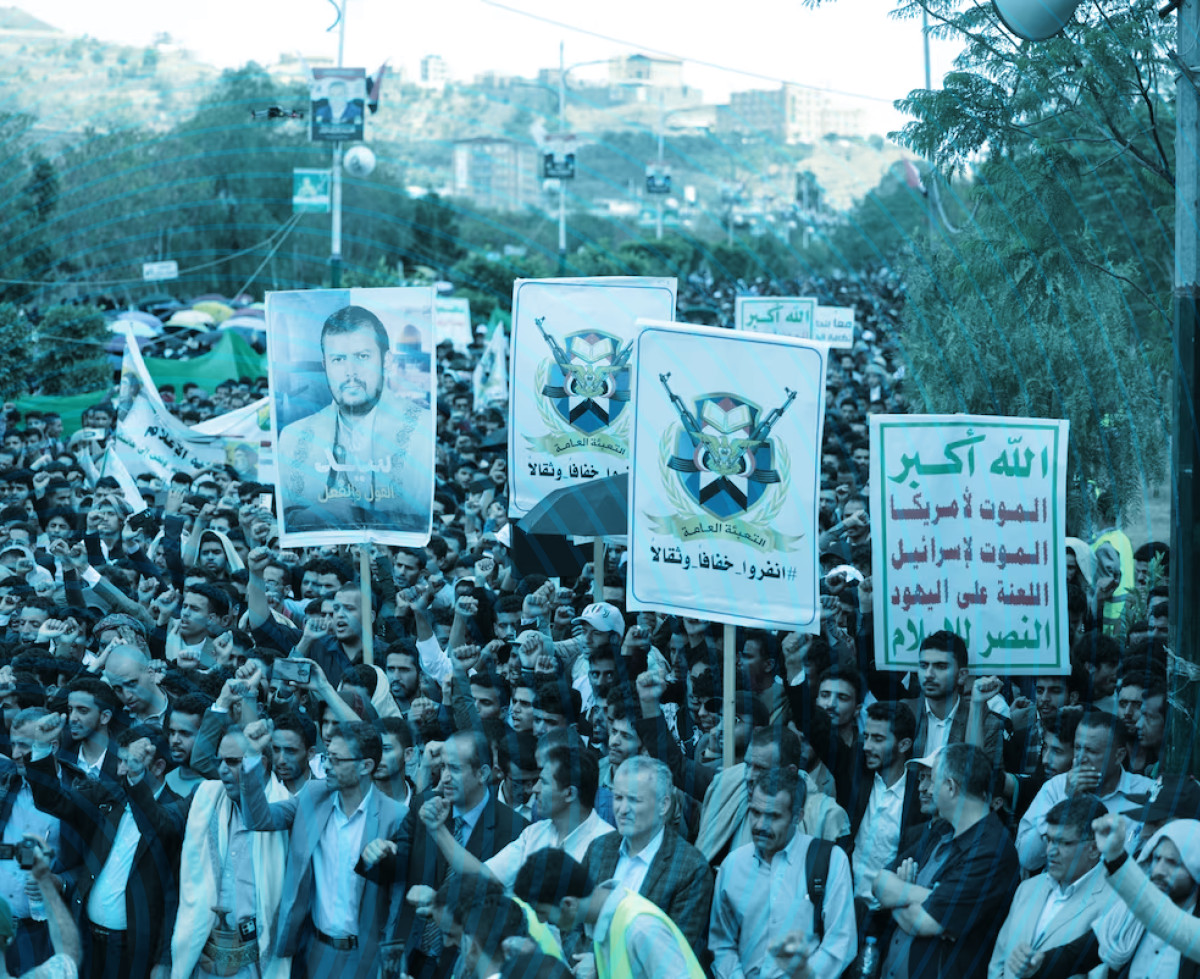
In a notable development in Yemen's political and security landscape, the Ansar Allah (Houthi) movement announced on 22 June 2026 that it had received a broad response to its leader Abdul Malik al-Houthi's call to raise combat readiness and reinforce the armed forces with recruits.
The announcement comes at a critical juncture marked by a prolonged military stalemate since the expiry of the UN-brokered truce in October 2022, the continued deadlock in political settlement efforts, worsening domestic economic and social conditions, and escalating geopolitical tensions linked to the regional conflict in the Red Sea and the broader Iran–Israel confrontation.
Far from constituting a routine mobilisation measure, this initiative has evolved into a parallel institution to the state and a durable pillar of Houthi governance, designed to manage both the current phase of the conflict and the movement's longer-term strategic ambitions.
Understanding this announcement requires tracing the evolution of Houthi mobilisation. What began as a temporary wartime recruitment effort in the early years of the conflict gradually developed into an organised strategic reserve by 2022, before expanding into a comprehensive programme of societal mobilisation under transnational slogans such as "al-Aqsa Flood" during 2023 and 2024. Today, it has entered a new phase of institutionalisation, becoming a central pillar of the movement's governance model and long-term survival strategy.
Against this backdrop, this Situation Assessment examines the implications of the announcement through a central proposition: general mobilisation should not be viewed as an inevitable prelude to the resumption of full-scale war. Rather, it constitutes a multifunctional strategic instrument that the Houthi movement employs to strengthen deterrence, reproduce its domestic legitimacy, enhance its leverage in the negotiating process, and reposition itself as an influential regional actor.
Accordingly, this analysis seeks to address several fundamental questions: What are the strategic implications of declaring general mobilisation at this particular juncture? Does it signal a shift towards resuming military operations, or does it instead serve to manage the current strategic stalemate while strengthening the movement’s political and military leverage? And how does this mobilisation interact with the group’s domestic pressures and regional ambitions?
To answer these questions, this Situation Assessment examines the political context surrounding the announcement, the evolution of the Houthi mobilisation project, and the strategic dimensions of its mobilisation discourse. It explores how the campaign serves multiple objectives, from consolidating domestic control and strengthening deterrence to managing internal pressures and advancing the movement's regional repositioning, before concluding with an analytical assessment grounded in current political and military indicators to evaluate the crisis's likely trajectory and its broader strategic implications.
I. The Context of the General Mobilisation Announcement
Ansar Allah’s (Houthi) announcement on 22 June 2026 that it was raising the level of general mobilisation came amid an exceptionally complex domestic and regional context, marked by the continuing military stalemate in Yemen, the deadlock in the political settlement process, mounting economic pressures, and escalating regional tensions linked to the confrontation between Iran and Israel and its repercussions for Red Sea security.
The convergence of these developments suggests that general mobilisation should not be understood as an immediate military response, but rather as part of a broader strategy for managing a transitional phase in which deterrence, negotiation and the reconfiguration of the balance of power intersect.
At the domestic level, the Yemeni conflict has remained in a state of 'neither war nor peace' since the UN-brokered truce expired in October 2022.
Although large-scale military operations have ceased, this relative calm has not evolved into a sustainable political settlement. Front lines have remained largely unchanged, while disagreements over core issues have persisted, foremost among them the mechanisms for paying public-sector salaries, the distribution of state revenues, the future of sovereign institutions, and the framework for a comprehensive political process.
The persistence of this situation has entrenched a reality characterised by the absence of both a full-scale war and sustainable peace, prompting all parties to seek new means to strengthen their negotiating positions without sliding into open confrontation.
Against this backdrop, recent months have witnessed a marked slowdown in implementing the UN-, Saudi-, and Omani-sponsored roadmap, amid continuing disagreements among the Yemeni parties over economic and political priorities, compounded by a decline in international attention to the Yemeni file as major powers have become increasingly preoccupied with other regional and global crises.
For the Houthis, the persistence of this stalemate entails political and economic risks. It constrains their ability to secure further gains through negotiations, while simultaneously compelling them to maintain a high level of military and organisational readiness to prevent their adversaries from exploiting the lull to rebuild their capabilities.
This has coincided with mounting economic pressures in areas under Houthi control, where the humanitarian crisis persists, purchasing power continues to decline, and challenges related to salaries and public services have become increasingly acute.
Under these conditions, general mobilisation serves as a political and social instrument as much as a military one. It enables the movement to redirect public discourse towards external threats, intensify societal mobilisation, and preserve organisational cohesion, thereby helping to limit the impact of economic conditions on its internal stability. [1]
At the regional level, the announcement came amid the continuing polarisation generated by the confrontation between Iran, the United States and Israel, and the resulting realignment of the priorities of what is commonly referred to as the Axis of Resistance.
Although the arenas in which the axis’s various actors operate differ, Houthi discourse in recent months has placed increasing emphasis on the concept of the “Unity of Fronts” as a political and military framework linking developments in Yemen, the Gaza Strip, Lebanon, Iraq and Iran.
The declaration of general mobilisation therefore carries a message that extends beyond the Yemeni arena: the movement remains part of the regional deterrence equation and is capable of contributing to any regional escalation should the axis's calculations so require.
The timing of the announcement is also linked to the continuing tensions in the Red Sea, which has emerged as one of the principal arenas of regional and international competition since late 2023.
Despite the military strikes the movement has sustained over the past two years, it continues to project an image of retaining its human and organisational capabilities, while emphasising that military pressure has neither undermined its internal structure nor diminished its capacity for mobilisation and mass recruitment.
From this perspective, the announcement also serves as a deterrent message to the regional and international actors involved in the conflict, signalling that the movement retains the capacity to withstand sustained pressure and regenerate its human and military resources.
In light of these developments, the timing of the announcement appears to have been driven less by battlefield indicators suggesting the imminent outbreak of a full-scale war than by a combination of political, military, and regional considerations that compelled the movement to reaffirm its state of readiness, strengthen its negotiating leverage, and preserve its internal cohesion.
Accordingly, the declaration of general mobilisation is best understood as an instrument for managing the conflict during a period of strategic stalemate, rather than as a signal of an imminent transition to a new phase of large-scale military operations.
II. The Evolution of the Houthi General Mobilisation Project: From Temporary Mobilisation to a Parallel State Institution
Over the past several years, the Houthis' concept of general mobilisation has evolved into a fully-fledged institution in its own right. Against this backdrop, the following section traces the emergence and evolution of this concept within the Houthi movement, highlighting its principal features at each stage, as follows:
Stage One (2020–2021): Ideological Mobilisation and the Social Engineering of the Environment
The period between 2020 and 2021 marked a pivotal turning point in the Houthis' strategy. During this phase, the movement shifted from relying on ad hoc military mobilisation tied to active battlefronts to embracing a comprehensive social-engineering project aimed at creating a supportive environment for its political project.
At this stage, the objective extended well beyond merely supplying the front lines with fighters. Rather, it sought to bring about a profound transformation of the Yemeni society's value system and cultural landscape, particularly in densely populated areas, to secure the movement's long-term survival as a de facto authority that could not easily be challenged.
To advance this objective, the movement activated an extensive network of educational and cultural mechanisms. It intensified the "cultural courses" imposed on public-sector employees, school students, and tribal leaders alike.
Reports by the United Nations Panel of Experts confirm that these programmes were specifically designed to instil Houthi ideology and reshape national identity in line with the movement's vision. As a result, schools and summer centres were transformed into ideological incubators intended not merely for education, but for cultivating a new generation whose loyalty was directed unreservedly towards the Houthi leadership. [2]
Concurrently with this process of cultural penetration, international human rights organisations documented a sharp escalation in the recruitment of children. According to Human Rights Watch, the movement exploited high levels of illiteracy and poverty, particularly in tribal areas, to recruit boys as young as 10 or 11 years old into its ranks, often despite the objections of their parents. [3]
Accordingly, this pattern of forced recruitment was not merely a means of compensating for manpower shortages. Rather, it served as an instrument for imposing social control and subordinating Yemeni families by transforming their children into instruments of the Houthis' de facto authority.
At the institutional level, the movement also used this period to link social affiliation with economic benefits. It restructured financial institutions, such as the Zakat Authority, so that they became instruments for rewarding loyalists and marginalising opponents. In doing so, it established a parallel administrative structure designed to secure the allegiance of socially and economically vulnerable groups. [4]
Consequently, mobilisation was no longer viewed by the movement as merely a military activity. Rather, it evolved into a comprehensive instrument of governance aimed at transforming Yemeni society from one characterised by multiple and competing loyalties into an ideologically conditioned society wholly subordinate to the central decision-making authority in Sana'a. As a result, any future attempt to dismantle this system of control would present not only a political challenge, but also a complex social and security one.
Stage Two (2022): From Temporary Mobilisation to a Strategic Reserve
The year 2022 marked a strategic turning point in the Houthis' military structure. The UN-brokered truce agreed in April of that year created an environment of "neither war nor peace", which the movement skilfully exploited to transform mobilisation from an emergency measure designed to replenish battlefield losses into a permanent pillar for building a long-term strategic reserve.
During this period, large-scale military operations largely came to a halt, easing the pressure of attrition and enabling the movement to transition to a phase of qualitative restructuring.
The movement exploited this period of relative calm to reorganise its military and organisational structures. It recruited new personnel and subjected them to intensive training programmes, away from the pressures and hazards of the active front lines.
Observers note that this period witnessed the consolidation of the concept of mobilisation as a strategy for force preservation. Mobilisation was no longer tied solely to the course of military operations; instead, it became a continuous administrative process aimed at maintaining a high level of manpower readiness while securing comprehensive organisational loyalty through networks of supervisors, which tightened their grip over every level of the state apparatus, from educational institutions to economic bodies. [5]
This period of military stalemate also provided the Houthis with a valuable opportunity to consolidate the shadow state they had constructed. While political negotiations unfolded through increasingly complex channels, from back-channel talks with Saudi Arabia to discussions over a comprehensive roadmap, the movement was simultaneously working on the ground to incorporate formal state institutions into its own war economy.
This integration was not merely a means of financing military operations; it also served to consolidate political control. Salaries and financial resources were increasingly tied to organisational loyalty, transforming state institutions, including the Central Bank in Sana'a and the tax and customs authorities, into instruments for entrenching the movement's influence beyond any meaningful oversight. [6]
Despite efforts to draw the movement into peace negotiations, it used the period of de-escalation to strengthen its own capabilities, proceeding on the premise that any future settlement must not undermine the institutional structure it had established.
By the end of 2022, the Houthis had successfully transformed the truce into a phase of comprehensive preparation, with mobilisation becoming an integral part of their governing authority's identity. Consequently, dismantling or reforming these institutional structures had evolved into an existential challenge that any future political settlement would struggle to overcome. [7]
Through this transformation, the movement demonstrated that its objective extended beyond merely ending the conflict. Rather, it sought to reshape the Yemeni state into a parallel entity that would be difficult to integrate or contain, capitalising on fragile regional balances and its intersecting interests with international actors.
Stage Three (2023–2024): Comprehensive Societal Mobilisation under the Banner of Operation al-Aqsa Flood
The events of 7 October 2023 marked a strategic turning point in the Houthis' mobilisation project. The movement successfully transformed the shock of Operation al-Aqsa Flood into the principal catalyst for the largest popular mobilisation campaign in its history.
The movement shifted from a state of tense stability to one of comprehensive societal mobilisation, exploiting the overwhelming emotional solidarity with the Palestinian cause to break down social barriers and expand its organisational and military base by launching what it termed the "Operation al-Aqsa Open Military Courses." [8]
These courses were far more than temporary military training programmes. Rather, they were designed as an institutional mechanism for integrating broad segments of society, including students, public-sector employees, and tribal and community leaders, into the movement's military structure.
United Nations estimates indicate a substantial increase in the movement's fighting force, from approximately 220,000 fighters in 2022 to around 350,000 by 2024. This expansion was driven by a dual strategy that combined incentives, including food assistance and salaries, with systematic coercion and ideological indoctrination in schools, universities, and summer camps.[9]
Reports further indicate that this mobilisation gave rise to what became known as the "Popular Mobilisation Forces," which function as a strategic reserve force intended to confer a popular character on the movement's military activities, notwithstanding the propagandistic exaggeration surrounding their capabilities, much of which is aimed at reinforcing regional deterrence. [10]
In parallel, the movement leveraged its operations in the Red Sea and the Gulf of Aden not only to disrupt international shipping but also as an effective instrument of regional propaganda that reinforced its domestic legitimacy.
By portraying itself as a leading actor within the Axis of Resistance and as a force confronting the United States and the United Kingdom, the movement succeeded in framing the conflict around what it described as three historical inevitabilities: the defeat of Israel, the destruction of its allies, and the triumph of Islam through a culture of jihad and martyrdom.
This discourse enabled the movement to transcend local divisions and redirect popular discontent towards an “external enemy”, thereby generating unprecedented popular momentum across Yemen’s northern highlands. [11]
At the operational level, this phase culminated in the movement’s consolidation as a regional force capable of coordinating directly with other actors within the Axis of Resistance, such as the Islamic Resistance in Iraq and Hezbollah, while also forging opportunistic, cross-ideological alliances with groups such as Somalia’s Al-Shabaab and Al-Qaida, to secure smuggling routes and expand its influence across the Arabian Sea and the Indian Ocean. [12]
While the movement continues its efforts to produce weapons domestically, particularly basic drones and short-range missiles, its strategic reliance on Iranian technology and support remains a decisive factor in its ability to sustain its operations.
Consequently, Operation al-Aqsa Flood was not merely a passing event for the Houthis; rather, it provided the fuel they used to complete the militarisation of society, leaving any future settlement hostage to the military and civilian formations that have become the backbone of the governing authority in Sana’a. [13]
Stage Four (2025–2026): Institutionalising Mobilisation and Transforming It into a Pillar of Governance
The June 2026 announcement marked the culmination of the Houthis' mobilisation project, signalling the transition of mobilisation from a mobilising instrument tied to wartime exigencies or regional solidarity into a structurally institutionalised system that integrates society into the state's military and security architecture.
The Houthi discourse no longer confined itself to calls for training or mobilisation. Instead, it formally announced the establishment of a permanent mobilisation force, the General Mobilisation Forces, endowed with an institutional status comparable to that of the regular armed forces and comprising hundreds of brigades and units deployed across residential districts and villages throughout the territories under its control.[14]
Specialised studies and analyses indicate that this new formation represents an explicit emulation of Iran's Basij Forces. Rather than serving merely as a fighting force, it functions as an organised instrument of social control, designed to reinforce organisational loyalty, monitor local populations at the neighbourhood level, and expand networks of political control.
The Mobilisation Office, established by decree of Abdul Malik al-Houthi in early 2024, has evolved into a major administrative and military centre of gravity, wielding broad powers that extend from field training and combat readiness to security and administrative support. This has turned the forces into an internal safeguard designed to protect the movement against popular discontent or any erosion of its support base.[15]
The institutionalisation of this force comes at a time of escalating tensions along the southern Yemeni front, where the movement has invoked the narrative of confronting external threats, whether by threatening to target any Israeli activity in Somaliland or by reinforcing its presence around the Bab al-Mandeb, to justify the continuation of military mobilisation. [16]
This expansion in organised manpower serves not only the movement's regional agenda but also constitutes an internal escalation matrix through which it exerts pressure on the Yemeni government and rival tribal forces, signalling that any resistance to its expansion will be met with an organised mobilisation force fully prepared for combat. [17]
By mid-2026, it had become clear that general mobilisation had evolved into an existential pillar of the Houthi governing system. It ensured a steady flow of human resources, created a pathway for the political advancement of loyalists, and provided a mechanism to consolidate internal ranks amid differences or disputes within the movement's leadership.
Yet this institutionalisation also carries the risks of "tense stability." While it affords the movement a tactical advantage and an enhanced capacity for coercion, it simultaneously traps Yemeni society in a state of perpetual conflict, making any transition towards a civilian state or a sustainable peace increasingly unlikely so long as the movement's survival remains tied to the maintenance of this parallel military structure, which leaves little room for compromise. [18]
III. Deconstructing the General Mobilisation Announcement
On 22 June 2026, the Houthis' General Mobilisation Forces announced their full compliance with movement leader Abdul Malik al-Houthi's call to raise the overall level of readiness, affirming their readiness to reinforce the armed forces with fighters at any time.
The statement further asserted that the General Mobilisation Forces comprise "hundreds of thousands" of personnel and "hundreds of mobilisation brigades," while continuing military training and force-generation programmes, strengthening coordination with the armed forces, and encouraging enrolment in the open military mobilisation courses conducted under the banner of Operation al-Aqsa Flood. It also reaffirmed that the mobilisation campaign remained linked to what the movement described as the "Unity of the Fronts" equation and to its support for the Palestinian cause.
The announcement constitutes the most comprehensive official statement on the mobilisation project since its inception, bringing together its military, political, and ideological messaging within a single, integrated framework.
The statement goes beyond announcing an increase in fighter numbers; it reflects the transformation of the mobilisation project from a community-based training programme into an attempt to build an organised manpower reserve that can be called upon when needed.
The statement deliberately emphasises the scale of the movement's manpower, the continuation of its training programmes, and their integration with the armed forces' command structure, suggesting that the movement is seeking to institutionalise mobilisation as a permanent component of its military and security architecture rather than as an exceptional measure tied to wartime conditions.
It is also notable that the statement extends beyond the conventional military dimension. It calls for the continuation of community- and tribe-based activities, the strengthening of general mobilisation, and the preservation of the unity of the home front. This suggests that the movement's concept of mobilisation extends beyond armed recruitment to encompass the reorganisation of society within networks of organisational loyalty and ideological conditioning.
In this sense, mobilisation is transformed into an instrument of social and political control, aimed at broadening the base of popular participation in the Houthi project and consolidating the relationship between society and the movement's institutions.
Another notable feature of the statement is its emphasis on the continuation of the Operation al-Aqsa Flood courses, which have, since late 2023, become one of the movement's principal instruments for mobilisation and training across the territories under its control.
The linkage between these courses and the announcement of general mobilisation further indicates that the movement views them as a mechanism for generating a long-term manpower reserve rather than merely as a temporary response to developments in Gaza. This reflects a broader shift towards institutionalising mobilisation and training as part of a permanent programme for military force generation.
The statement also conveyed clear political and regional messages. It did not confine itself to developments within Yemen; instead, it linked mobilisation to support for the Palestinian people, praised Iran, and reaffirmed the movement's alignment with the Axis of Resistance and the "Unity of the Fronts" equation.
This linkage reflects the movement's attempt to redefine its role as a regional actor rather than merely a party to the Yemeni conflict, thereby strengthening its political standing within the Iran-led axis and affording it greater room for manoeuvre in regional interactions.
From another perspective, the repeated emphasis on immediate readiness to reinforce the armed forces, without announcing any large-scale troop movements or the opening of new fronts, suggests that the statement is intended primarily to strengthen deterrence and signal readiness rather than to announce a decision to escalate militarily.
This is consistent with the continuing military stalemate across most Yemeni frontlines, which the UN Special Envoy has described as being characterised by stable lines of contact despite the persistence of limited military activity. At the same time, the political track remains the option supported by the United Nations and the wider international community.
Accordingly, the General Mobilisation announcement can be understood as a multi-layered message directed simultaneously at domestic audiences, local actors, and regional and international stakeholders.
It reaffirms the movement's continued capacity for mobilisation and organisation, reinforces the image of military readiness, and reproduces its mobilisation discourse, without providing conclusive indications that a decision has been taken to transition to full-scale war. Consequently, the statement is best understood in terms of its political and strategic functions as much as its military one.
IV. The Strategic Dimensions of the General Mobilisation Announcement
The Houthis' announcement of general mobilisation cannot be interpreted as a direct military response to an immediate battlefield development. Rather, it reflects a shift in the movement's approach to managing the conflict at a stage characterised by the stalemate on the ground and the continuing deadlock in the political process.
The timing of the announcement, coinciding with stalled negotiations over economic issues, continuing tensions in the Red Sea, and intensifying regional competition, suggests that general mobilisation constitutes a multidimensional strategic instrument aimed at reshaping the political and military environment rather than preparing for a full-scale war.
From this perspective, general mobilisation performs a set of interrelated functions that extend beyond the military dimension. It enables the movement to maintain a high level of readiness and deterrence, strengthen its internal cohesion, reproduce its political legitimacy, and improve its negotiating position, while also conveying deterrent messages to regional and international actors regarding its ability to influence the trajectory of escalation or containment.
It also affords the movement strategic flexibility, enabling it to shift between political and military instruments of pressure in response to changes in the regional environment, without abandoning the option of negotiation or sliding into a large-scale confrontation.
The announcement of general mobilisation reflects the continuation of the structural transformation the Houthi movement has undergone in recent years: from an armed insurgency into a de facto authority exercising state functions across the territories under its control.
In this context, general mobilisation is no longer merely a means of supplying fighters; it has become an instrument of security and social governance that the movement employs to manage society, strengthen institutional control, and reorganise the relationship between the governing authority and local actors.
This approach has assumed particular significance in light of the sustained decline in the tempo of large-scale military operations since the 2022 truce, prompting the movement to shift its centre of gravity from managing the battlefield to managing the social and political sphere.
Accordingly, general mobilisation can be understood as a means of sustaining a state of societal readiness and maintaining political mobilisation, thereby ensuring the continuity of organisational loyalties and preventing the loss of mobilisation momentum during periods of military stalemate.
Developments following the General Mobilisation announcement indicate that the movement did not confine itself to issuing the declaration. Rather, it sought to translate this into practice by intensifying tribal meetings and general mobilisation activities across several governorates under its control.
Nor were these activities confined to calls for heightened readiness. Rather, they were organised in coordination with the movement's General Mobilisation apparatus, reflecting an organisational mechanism aimed at integrating tribal communities into its military and political mobilisation system, while transforming tribal loyalty into a mobilisation resource that serves the movement's objectives.
Conversely, calls for tribal mobilisation (Nakf) emerged in Al-Jawf Governorate, followed by an anti-Houthi tribal mobilisation and reciprocal mobilisation by both sides. This suggests that the tribe has become an arena of competition among local actors, rather than merely a neutral social constituency.
This parallel dynamic reflects the fact that general mobilisation serves a function extending beyond the enhancement of military capabilities. It is also employed to reshape the movement's relationship with the tribal structure by incorporating tribes into networks of loyalty linked to the movement, while simultaneously containing or counterbalancing any independent tribal mobilisation that could evolve into competing centres of influence or pressure. In doing so, it enhances the movement's capacity to manage the social and security spheres across the territories under its control. [19]
Subsequent developments on the ground also indicated that the announcement coincided with a rise in signs of limited military friction, including the clashes that occurred in the Hays area along the western coast, which resulted in fatalities among government forces. This suggests that the movement seeks to maintain a calibrated level of military pressure without escalating into a full-scale confrontation, thereby advancing its political objectives and reinforcing its narrative of sustained combat readiness.
At the political level, the crisis triggered by the landing of the Iranian aircraft at Sana'a Airport on 3 July 2026, and the subsequent escalation in Houthi rhetoric towards Saudi Arabia, contributed to the renewed instrumentalisation of the "resistance" narrative as an overarching framework for general mobilisation.
The movement portrayed the incident as evidence of the continuing “Saudi-American blockade”, linking the operation of Sana’a Airport to the defence of national sovereignty. It threatened to target Saudi airports and critical infrastructure should further attempts be made to prevent aircraft from landing, while affirming that flights between Sana’a and Tehran would continue as a step towards “breaking the blockade”.
In the same context, the discourse was not confined to military threats. It was also accompanied by explicit calls to continue general mobilisation activities, strengthen general mobilisation, and enrol in open military training courses, alongside assertions that the forces stood ready to implement the movement leadership’s directives within the framework of what it described as “breaking the blockade” and “ending the foreign military presence”.
This linkage between the political crisis and internal mobilisation reveals the movement's attempt to transform a specific incident into a mechanism for reproducing its domestic legitimacy by integrating local issues, such as the operation of Sana'a Airport and economic concerns, into the broader narrative of a regional conflict.
Through this mechanism, general mobilisation ceased to be merely a response to an immediate security threat. Instead, it became a means of legitimising the continuation of military mobilisation and security policies, while strengthening the cohesion of the movement's social and organisational base by portraying the confrontation with Saudi Arabia as an extension of the struggle to defend national sovereignty and resist the blockade, rather than simply a dispute over the operation of Sana'a Airport or economic issues. [20]
These practices are consistent with the literature on rebel governance, which holds that armed groups, once they have consolidated territorial control, tend to establish security, administrative, and social institutions parallel to those of the state to institutionalise their authority, strengthen their legitimacy, and gradually shift from reliance on military force alone towards the use of administrative and social-control mechanisms as more sustainable sources of political influence.
From this perspective, general mobilisation appears to form part of a long-term strategy for reproducing the movement's authority, rather than merely a contingent response to immediate military developments.
General mobilisation, against the backdrop of the current political deadlock, particularly the continued impasse over salaries, public revenues, and sovereign institutions, constitutes a strategic instrument of pressure aimed at reshaping the balance of power at the negotiating table without necessarily escalating into a full-scale military confrontation.
Since the UN-mediated truce of April 2022, the Houthi movement has increasingly employed military and economic pressure in parallel with the negotiating process, making general mobilisation an integral part of a strategy of coercive bargaining, aimed at raising the costs of maintaining the status quo for its adversaries while keeping the door open to a negotiated settlement.
In this context, the objective of general mobilisation is not so much to secure a decisive military victory as to strengthen the movement's negotiating position and compel the opposing parties to make concessions on economic and sovereign issues.
The movement has employed a combination of military and economic pressure throughout its negotiations with Saudi Arabia and the Yemeni government, pursuing these measures in parallel with the talks. The negotiations coincided with attacks on government-controlled oil export terminals, accompanied by threats to repeat such attacks unless its demands, including the payment of salaries and the reopening of Sana'a Airport and the Hodeidah Port, were met.
This policy contributed to weakening the financial resources of the internationally recognised government. It intensified the pressure upon it, thereby placing the Houthis in a stronger negotiating position in their talks with Saudi Arabia.
The Houthi strategy integrates the military and economic tracks as complementary instruments for strengthening the movement’s negotiating leverage, employing control over resources and revenues in parallel with battlefield deterrence.
This approach seeks to curtail the internationally recognised government's access to revenue sources, thereby weakening its position at the negotiating table while enhancing the movement's ability to impose its own terms on the management of economic institutions, salary payments, and national resources.
Within this framework, general mobilisation affords the movement a high degree of tactical flexibility, enabling it to shift between escalation and de-escalation in line with the requirements of the negotiating process. Accordingly, the intensification of mobilisation rhetoric and the display of military readiness should not necessarily be interpreted as signalling a decision to return to war. Rather, they constitute a deterrent signal intended to shape the other parties' calculations and raise the costs of rejecting the Houthis' demands.
This pattern was particularly evident during the negotiations over the salary issue, where political and economic demands were coupled with threats to target oil facilities or to expand military operations, without resulting in a complete breakdown of the negotiations. [21]
Accordingly, general mobilisation can be understood as a key component of the movement's strategy of political deterrence, serving a dual function: preserving military readiness on the one hand and strengthening its negotiating leverage on the other.
In this sense, general mobilisation extends beyond mere preparation for the possibility of confrontation. Instead, it becomes an instrument for reshaping the negotiating environment by intensifying psychological, political, and economic pressure on the opposing parties, thereby encouraging them to reassess the costs of prolonging the deadlock against the alternative of making concessions on the disputed issues.
This behaviour reflects a negotiating pattern that has become increasingly recurrent in recent years, characterised by the calibrated use of the threat of force to extract political and economic concessions, while maintaining conditional de-escalation as a more likely outcome than a return to full-scale war. [22]
General mobilisation announcements have evolved beyond conventional military mobilisation to become a central strategic instrument aimed at preserving the existing balance of deterrence and maintaining the status quo in the face of attempts to reshape the balance of power.
Since the cessation of major ground operations, the movement has shifted its focus towards demonstrating sustained military capability and enduring readiness, rather than pursuing immediate battlefield gains. This has been achieved through training programmes, the expansion of its manpower reserve, and military parades.
These measures are intended to convey a clear message to the movement's adversaries that any attempt to return to full-scale confrontation would face an actor with a strong capacity to absorb and replenish its losses, thereby increasing the political and material costs of any effort to achieve a military decision.
External air strikes, despite their tactical impact, have demonstrated only limited effectiveness in degrading these military capabilities, owing to the movement's reliance on a decentralised military structure and highly mobile units capable of continuous reconstitution, thereby reinforcing its confidence in its capacity for long-term resilience. [23]
This approach is consistent with the principles of asymmetric warfare, in which the credibility of deterrence derives from the armed actor's ability to convince its adversaries that it can sustain a prolonged conflict.
General mobilisation is not confined to augmenting the movement's manpower. Rather, it also seeks to reinforce the image of an organisation resilient to both economic and military pressure, capable of preserving its core arsenal by dispersing weapons stockpiles across mountainous terrain and periodically reconstituting its military capabilities, thereby rendering it resistant to complete attrition. [24]
Nor is this objective divorced from the political track. Rather, such readiness is regarded as an instrument of pressure that discourages the other parties from believing that a settlement can be imposed by force, while underscoring the impossibility of excluding the movement from any future security or political arrangements. At the same time, it strengthens the movement's strategic autonomy by continuing to develop its missile capabilities and unmanned aerial systems. [25]
Conversely, this escalation in general mobilisation gives rise to the security dilemma, whereby measures the Houthi movement regards as defensive or deterrent may be perceived by the other parties as preparations for offensive action, prompting them to adopt countermeasures that generate an unintended cycle of escalation.
Nevertheless, the fundamental objective remains the consolidation of a deterrence equilibrium that discourages the other parties from testing the balance of power, while keeping the political track open. In this sense, general mobilisation serves as an instrument for managing the conflict rather than securing a military decision, increasing the costs of disrupting the status quo and encouraging the other parties to favour de-escalation.
Nevertheless, the success of this strategy ultimately depends on the careful calibration of military signalling to avoid miscalculation that could transform deterrence into confrontation in a regional environment where local dynamics are deeply intertwined with international complexities.
The strategic significance of general mobilisation extends beyond the military and external dimensions. It also serves as a vital instrument for managing the economic and social challenges confronting the movement across the territories under its control.
Against the backdrop of worsening living conditions, declining public services, the continuing salary crisis, and rising poverty rates, the de facto authority finds itself under mounting public pressure that threatens the cohesion of its social support base.
General mobilisation is therefore employed as a mechanism of political containment aimed at reframing national priorities by directing public discourse towards external threats and linking economic hardship to the continuation of the war and sanctions. In doing so, it helps ease domestic tensions and redirect popular discontent.
Beyond its discursive function, general mobilisation provides the movement with a coherent organisational framework through which it can incorporate young people into training programmes and paramilitary structures. This, in turn, strengthens the institutional linkage between society and the movement while reinforcing local loyalties.
This pattern of mobilisation-based integration functions as a safety valve, limiting the risk of gradual erosion within the movement’s social base and enabling it to preserve internal cohesion amid mounting humanitarian and economic pressures. In this way, general mobilisation is transformed from a mere security measure into an instrument for consolidating control and regulating the social fabric during periods of acute strain.
General mobilisation assumes dimensions that extend beyond the confines of the Yemeni conflict, evolving into a geopolitical instrument that redefines the movement's role within the shifting landscape of regional power dynamics.
By linking general mobilisation measures to strategic concepts such as the “unity of arenas” and support for the Palestinian cause, the movement seeks to move beyond its characterisation as a local party in a civil conflict and present itself as an influential regional actor capable of shaping international security calculations, particularly in vital maritime corridors such as the Red Sea and the Bab el-Mandeb Strait.
This discourse is intended to affirm the movement's place at the heart of the wider regional confrontation between Iran and Israel, thereby enhancing its strategic significance in the calculations of key actors across the Middle East.
Moreover, the movement employs this strategy to enhance its standing among its regional allies and demonstrate the continued effectiveness of its organisational structures and mobilisation capabilities. Consolidating this regional positioning affords the movement greater room for political manoeuvre: it seeks not merely to entrench its position, but to secure a central role in any future security or political arrangements concerning regional de-escalation or the protection of international shipping routes.
Accordingly, general mobilisation is transformed from a purely domestic military measure into a regional instrument of pressure and negotiation, enhancing the movement's strategic leverage and positioning it as an indispensable actor in any future effort to reshape the regional security architecture.
Although current indicators do not suggest that the movement is preparing to launch a full-scale war, the continued expansion of general mobilisation and escalating rhetoric increases the risk of strategic miscalculation. In a complex regional environment characterised by mutual distrust, multiple actors, and the growing entanglement of the Yemeni conflict with developments in the Red Sea, messages originally intended to reinforce deterrence may instead be interpreted as signalling imminent offensive intentions.
Such divergent interpretations of these signals may prompt other parties to adopt pre-emptive measures, creating escalatory dynamics that could prove difficult to contain, particularly if the effectiveness of political communication channels among the parties involved in the crisis continues to erode.
Accordingly, the principal risk lies not in the declaration of general mobilisation as a direct decision to wage war, but in the possibility that deterrence dynamics could inadvertently escalate into an unintended confrontation.
Accordingly, the most likely trajectory of the conflict is a transition to a new phase of managed mutual deterrence, in which general mobilisation is employed as an instrument to strengthen political and military positions, while preserving the option of escalation as a means of political coercion rather than a strategic objective in its own right.
Nevertheless, the success of this approach will ultimately depend on the ability of all parties to manage the pace of their strategic competition and preserve channels of communication, thereby avoiding a slide into a large-scale confrontation whose consequences would extend far beyond the calculations of any of the actors involved.
V. Conclusion
The available evidence suggests that the Houthi movement's declaration of general mobilisation is, first and foremost, a multi-functional strategic instrument that extends well beyond its immediate military dimension. It serves to strengthen military readiness, reconstitute deterrence, reinforce internal cohesion, and enhance the movement's negotiating position amid the continuing military and political stalemate.
Accordingly, the current mobilisation discourse reflects the movement's effort to manage the conflict environment and reshape its strategic dynamics far more than it signals an imminent decision to embark on a large-scale military confrontation.
The movement's behaviour likewise appears to remain shaped by a combination of local, regional, and international considerations that constrain its options for escalation, while preserving sufficient flexibility to employ the threat of force or limited escalation as instruments of political and military pressure whenever circumstances require.
This suggests that the future trajectory of the conflict will remain closely tied to the course of the Yemeni negotiations, the level of tension in the Red Sea, and the broader pattern of regional dynamics, most notably the Iran–Israel relationship, and the extent to which those dynamics are projected onto the Yemeni theatre.
Accordingly, any assessment of the crisis's trajectory should be based on monitoring actual operational indicators rather than mobilisation rhetoric alone. In this context, particular attention should be paid to the scale of military build-ups, patterns of force redeployment, levels of combat readiness, and developments in maritime activity, as well as the course of political contacts and regional and international mediation efforts.
These indicators will provide a more reliable basis for determining whether general mobilisation will remain an instrument for managing the conflict and reinforcing deterrence, or evolve into a prelude to a shift in the nature and intensity of military operations.
Accordingly, this assessment concludes that, under the current circumstances, the Houthi movement's general mobilisation rhetoric should be understood as part of a broader strategy of conflict management and political and military repositioning, rather than as a standalone indicator of a full-scale war.
Nevertheless, should the regional environment continue to generate new flashpoints or the political process falter, the level of risk is likely to increase. This underscores the need for sustained monitoring of operational and political indicators, as these provide the most reliable basis for assessing the trajectory of the crisis in the period ahead.
***
[1] The Houthi mobilisation coincides with mounting economic and humanitarian pressures across the territories under its control, which are home to Yemen's largest population concentration. According to the June 2026 briefing delivered to the UN Security Council by Tom Fletcher, the United Nations Under-Secretary-General for Humanitarian Affairs, more than 18.3 million people are experiencing acute food insecurity. An estimated 2.2 million children are suffering from malnutrition, including 537,000 with severe acute malnutrition. Meanwhile, more than 19 million people require humanitarian assistance, and 17.8 million need health services. In addition, the 2026 Humanitarian Response Plan has secured only 15% of its required US$2.5 billion in funding, leaving a shortfall of more than US$2.1 billion. This comes amid a decline of more than 60% in humanitarian funding compared with the early years of the conflict. These indicators are particularly significant in the governorates under Houthi control, which account for the largest share of Yemen's population and humanitarian needs. Against the backdrop of the continuing salary crisis, rising prices, and the erosion of purchasing power, social and economic pressures have intensified, prompting the group to seek to contain them by leveraging the rhetoric of mass mobilisation.
[2] Edith M. Lederer, "Iran's Help Has Transformed Yemen's Houthi Rebels into a Potent Military Force, UN Experts Say," Associated Press, November 3, 2024, https://apnews.com/article/houthis-yemen-united-nations-sanctions-2368b285b8872d08008998cbb8453a2a
United Nations Panel of Experts on Yemen. Final Report of the Panel of Experts on Yemen Pursuant to Security Council Resolution 2140 (2024). New York: United Nations Security Council, 2024. https://documents.un.org/doc/undoc/gen/n24/194/59/pdf/n2419459.pdf
[3] Human Rights Watch. "Yemen: Prioritize Protection of Children; Include Children’s Rights in Potential Peace Agreement." November 20, 2023. https://www.hrw.org/news/2023/11/20/yemen-prioritize-protection-children
[4] Eleonora Ardemagni, Beyond the Axis: Yemen's Houthis are Building their 'Network of Resistance', Royal United Services Institute (RUSI), November 18, 2024. https://www.rusi.org/explore-our-research/publications/commentary/beyond-axis-yemens-houthis-are-building-their-network-resistance
[5] Edith M. Lederer, op. cit.
[6] Andrea Carboni, “The Houthi Movement and the Management of Instability in Wartime Yemen,” Civil Wars, published online January 9, 2025, https://doi.org/10.1080/13698249.2024.2347144
[7] Sana'a Center for Strategic Studies. The Yemen Review 2023. Sana'a: Sana'a Center for Strategic Studies, February 2024. https://sanaacenter.org/publications/the-yemen-review/21871
[8] Luca Nevola, “The Houthis’ Militarization Machine: The Group's Strategic Shift: Mobilizing for Palestine and Expanding Regional Influence,” Istituto per gli Studi di Politica Internazionale (ISPI), December 17, 2024, https://www.ispionline.it/en/publication/the-houthis-militarization-machine-194526
[9] Eleonora Ardemagni, op. cit.
[10] Luca Nevola, op. cit.
[11] Luca Nevola, op. cit.
[12] Eleonora Ardemagni, op. cit.
[13] Fabian Hinz, “Made in Yemen? Assessing the Houthis’ Arms-Production Capacity,” Missile Dialogue Initiative, International Institute for Strategic Studies (IISS), April 10, 2025, https://www.iiss.org/online-analysis/missile-dialogue-initiative/2025/04/made-in-yemen-assessing-the-houthis-arms-production-capacity/
[14] South24 Center, “Houthi Leader Signals Internal War Readiness, Threatens Israeli Activity in Somaliland,” South24 Center, June 25, 2026, https://south24.net/news/newse.php?nid=5565
[15] يمن فيوتشر. "اليمن: صحفي متخصص يقرأ دلالات بيان 'قوات التعبئة' الحوثية ويحذر من مؤشرات تصعيد محتملة". 22 يونيو/حزيران 2026. https://yemenfuture.net/news/39453
[16] South24 Center, ibid.
[17] يمن فيوتشر، مصدر سابق.
[18] يمن فيوتشر، مصدر سابق.
[19] الجزيرة نت، "من مطار صنعاء إلى تهامة.. كيف اشتعل التصعيد في اليمن؟"، 5 يوليو 2026، تاريخ الاطلاع 7 يوليو 2026، https://www.ajnet.me/news/2026/7/5/%D9%88%D8%B2%D9%8A%D8%B1-%D9%8A%D9%85%D9%86%D9%8A-%D9%85%D9%82%D8%AA%D9%84-15-%D9%85%D9%86-%D8%A7%D9%84%D9%82%D9%88%D8%A7%D8%AA-%D8%A7%D9%84%D8%AD%D9%83%D9%88%D9%85%D9%8A%D8%A9
[20] حسن حيدر ويورونيوز، "طائرة إيرانية تعيد التوتر بين الحوثيين والسعودية.. وتهديد باستهداف مطارات ومصالح المملكة،" يورونيوز عربي، 3 يوليو 2026، تاريخ الاطلاع 7 يوليو 2026، https://arabic.euronews.com/2026/07/03/the-houthis-issue-a-threat-to-saudi-arabia-after-the-iranian-plane-incident
[21] Sana'a News Journal, "Catching Up on the Back-Channel Peace Talks in Yemen," July 7, 2026, accessed July 7, 2026, https://www.sanaanewsjournal.com/article/660840135-catching-up-on-the-back-channel-peace-talks-in-yemen
[22] Eleonora Ardemagni, "The Houthis’ Economic War Threatens Lasting Peace in Yemen," Arab Gulf States Institute in Washington, June 15, 2023, accessed July 7, 2026, https://agsi.org/analysis/the-houthis-economic-war-threatens-lasting-peace-in-yemen/
[23] Baraa Shiban, "Bombing Yemen’s Houthis: Not a Long-Term Strategy," Royal United Services Institute (RUSI), January 16, 2024, accessed July 7, 2026, https://www.rusi.org/explore-our-research/publications/commentary/bombing-yemens-houthis-not-long-term-strategy
[24] Mariel Ferragamo and Kali Robinson, "Iran’s Support of the Houthis: What to Know," Council on Foreign Relations, updated April 10, 2026, accessed July 7, 2026, https://www.cfr.org/articles/irans-support-houthis-what-know
[25] Eleonora Ardemagni, op. cit.
إخلاء للمسئولية: تعبّر وجهات النظر المذكورة عن آراء كاتبها ولا تعكس بالضرورة وجهات نظر المركز أو فريق العمل.

التعليقات